
The Arabic Lounge in a Dubai Context
An Arabic lounge — a majlis — in Dubai serves a different function from a living room. It is the space where guests are received formally, where business is discussed over qahwa and dates, and where large family gatherings happen without the constraint of indoor furniture arrangements. The word itself means "a place of sitting," and in Dubai that sitting can happen indoors or in a purpose-built outdoor tent that extends the villa or event footprint into the garden.
Setting up an outdoor Arabic lounge in Dubai involves three decisions: the overhead structure, the seating arrangement, and the climate management. Get all three right and the space works across the cooler months — October through April — when outdoor entertaining in Dubai is genuinely comfortable. Get the climate management wrong and the space is unusable before 9pm in September regardless of how well the tent and seating are executed.
Outdoor Tent Options for Arabic Lounges in Dubai
Traditional Marquee Tent
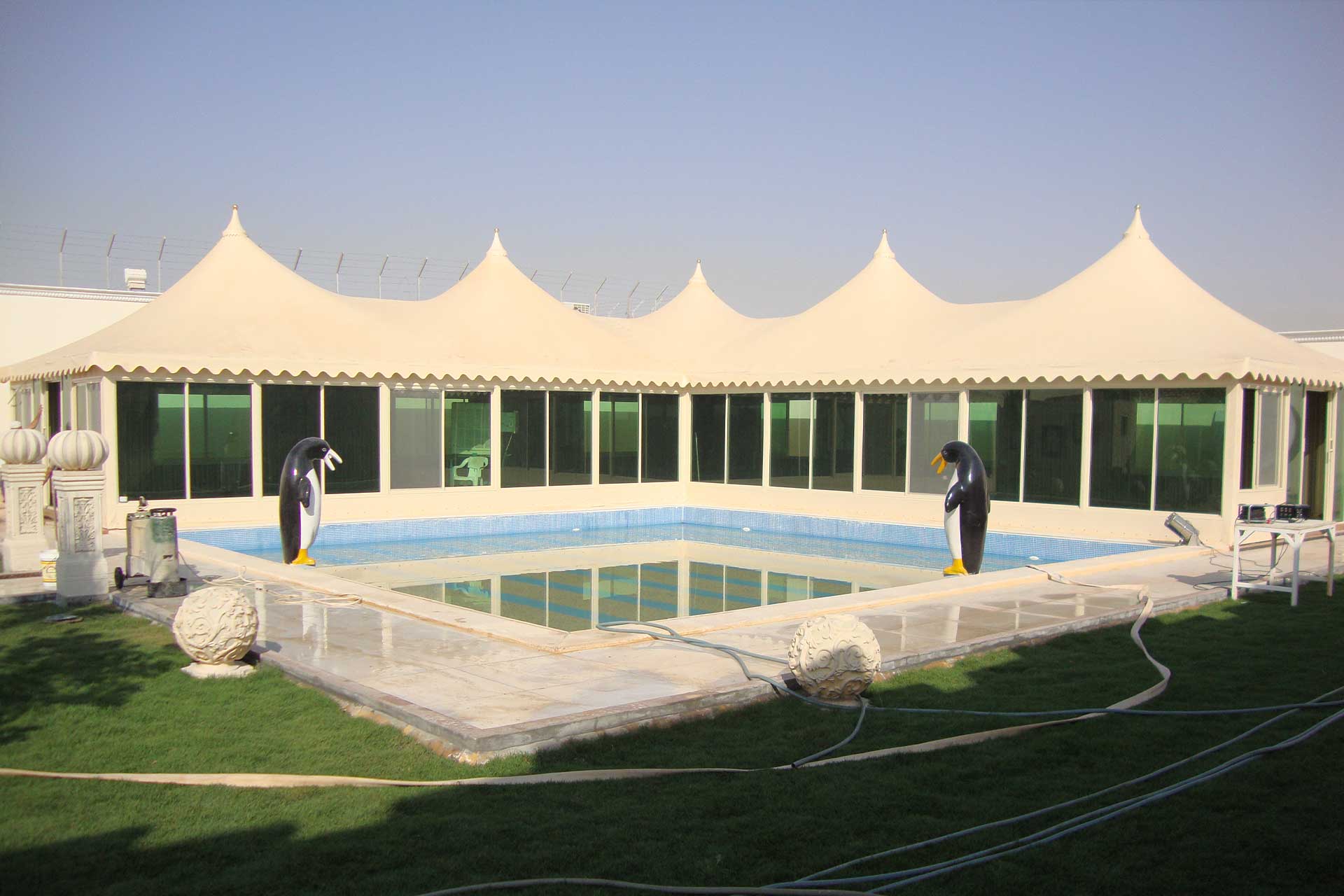
A fabric marquee with draped interior lining is the classic choice for Arabic lounge events in Dubai — Eid gatherings, waleemas, corporate Ramadan tents, and national day receptions. The tent provides a defined space, the fabric lining conceals the structural frame, and the traditional peaked or domed profile signals the Arabic occasion to guests before they enter.
For private villa use in Dubai, a 6m x 9m or 9m x 12m frame tent with interior fabric lining covers a typical family gathering of 30 to 80 guests in a floor-seated arrangement. Larger events — 150 guests and above — use clear-span tents from 15m x 20m upward to eliminate internal poles that obstruct the seating layout.
Bedouin-Style Goat Hair Tent
For events and hospitality where authenticity matters more than convenience, a hand-woven goat hair tent (khaimah min shaar al-maiz) creates a visual and sensory atmosphere that no synthetic fabric can replicate. The open weave of the fabric allows ventilation and filters light in a characteristic way. In Dubai, Bedouin-style tent installations appear at cultural events, heritage festivals, and high-end glamping hospitality where the tent IS the experience rather than just the overhead cover.
Authentic goat hair tents require more maintenance than synthetic alternatives and do not perform as weather barriers — they are not suitable as the primary shelter for events where rain is a risk. For Dubai winter events where weather is mild and the tent is decorative rather than protective, this is rarely a problem.
Arisha Reed and Palm Frond Structures
An arisha — a lightweight structure of woven palm fronds or reed over a timber or steel frame — is the traditional Emirati approach to outdoor shade in private gardens and wadis. In Dubai villa gardens, an arisha creates an organic, low-profile outdoor majlis that looks like it belongs to the landscape rather than sitting on top of it.
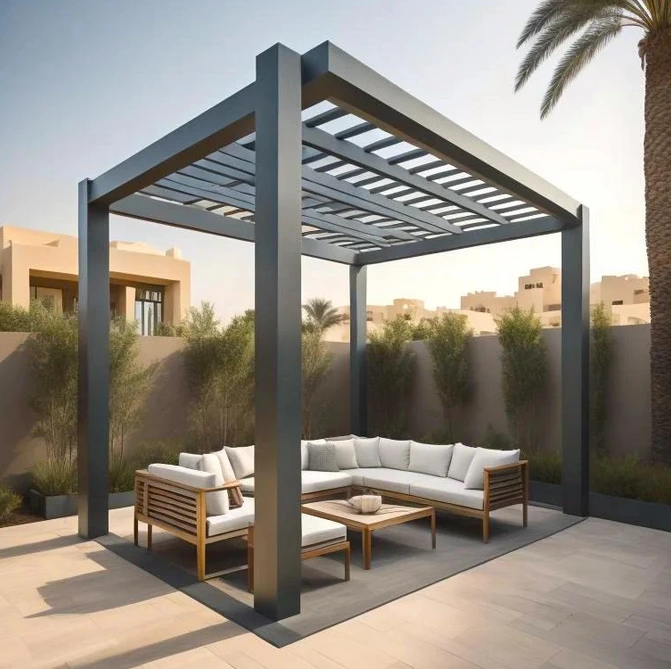
Arisha structures are not weatherproof and degrade over time. For a permanent garden lounge in a Dubai villa, a steel-framed pergola with arisha-style cladding (palm frond panels fixed to the frame) provides the aesthetic without the structural vulnerability of authentic natural material construction.
Seating Arrangements for Outdoor Arabic Lounges
Floor Seating: Mattress and Cushion Layout
Traditional Arabic floor seating uses thick floor mattresses (farsh) arranged around the perimeter of the tent with bolster cushions at the back and loose scatter cushions across the seating area. A central aisle or open floor space allows guests to enter and exit without stepping over others — important for events with 30 or more guests where movement is continuous.
For Dubai events, high-density foam mattresses in 10cm to 15cm thickness covered with fabric suited to the event theme are standard. Velvet covers and gold or silver embroidery are correct for formal occasions. Cotton or linen covers in neutral tones suit casual gatherings and contemporary villa aesthetics better.
Low Diwan Sofas
Low diwan sofas — typically 30cm to 45cm high — provide the visual height of a sofa with a seating posture closer to floor level than standard Western furniture. They are easier for older guests than pure floor seating and create a slightly more contemporary look than full floor arrangements. Diwan sofas arrange against the tent walls with a central coffee table row.
Mixed Arrangement
Many Dubai Arabic lounge setups use a mixed arrangement: floor seating areas for younger guests and informal conversation near the tent centre, diwan sofas or higher chairs around the perimeter for guests who prefer elevated seating, and a formal reception area near the main entry with matching upright chairs for the host reception line.
Climate Control for Dubai Arabic Lounges
Ramadan and Summer Tent Cooling
A tent in Dubai in September or early October — the months immediately following summer — needs active cooling even after sunset. Surface temperatures in the tent fabric remain above ambient air temperature for two to three hours after the sun sets. Plan for portable AC units at a rate of one 1.5-ton unit per 15 square metres of tent floor area, running for two hours before guests arrive to pre-cool the fabric and the air mass inside.
Direct the cold air supply across the floor level — not upward at the tent ceiling — to create a cool zone where guests are seated. A tent cooled at ceiling level is not a tent cooled where it matters. Use flexible ductwork to distribute supply points evenly around the perimeter rather than concentrating cooling at one end of the tent.
October to April: Fan Cooling and Ventilation
From mid-October through April, Dubai outdoor temperatures in the evening are comfortable for outdoor sitting — typically 18°C to 28°C in the tent if it is ventilated. Open the tent sidewalls partially to allow cross-ventilation. Pedestal fans or ceiling fans on the structural frame create enough air movement to prevent the stuffy feeling of a closed tent without requiring mechanical cooling.
Décor and Lighting for Outdoor Arabic Lounges in Dubai
Lighting transforms an outdoor Arabic lounge more than any other single element. Warm white LED strips along the tent ridge and perimeter, supplemented by hanging lanterns at conversation areas, create the ambient atmosphere that characterises a well-executed Arabic lounge.
Avoid: single overhead flood lighting from one source — it creates harsh shadows and makes faces look flat. Use layered lighting: ambient (tent ridge strips), accent (lanterns over seating areas), and task (reading lamps or spotlights at the host position).
Traditional Arabic décor elements that photograph well and are available from Dubai event hire companies: brass khaleej coffee pots (dallah) as centrepieces, incense burners (mabkhara) placed strategically around the space, woven palm leaf (khoos) decorative items, and camel wool cushion covers in brown and beige tones.
Setting Up an Arabic Lounge in Dubai: Who to Hire
A complete outdoor Arabic lounge setup involves at minimum: a tent supplier and installer, a flooring contractor (if the ground surface needs covering), a furniture hire company for seating, an AV and lighting contractor for sound and lights, and a catering or hospitality service. Coordinating these separately on a tight event timeline is the main operational challenge.
For villa installations where the lounge is a permanent outdoor feature rather than an event tent, the scope reduces to: tent or pergola structure, permanent floor surface, fixed furniture, and a climate control solution that works for the specific location.
Create Your Arabic Lounge in Dubai
Arab Muzalat designs and installs outdoor tent structures for Arabic lounges across Dubai — from Ramadan event tents to permanent garden majlis installations in Jumeirah, Arabian Ranches, and Palm Jumeirah villas. Contact us to discuss your space and event requirements.