
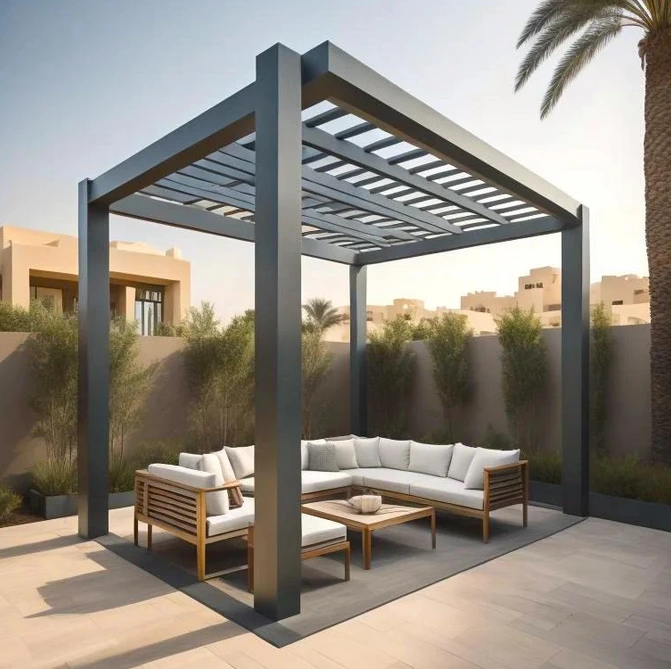
Most tent buyers eyeball their lawn and pick a number. They end up either with a tent that swallows the garden or one where guests bump elbows. Here is how professional installers think about size, and a simple framework you can copy.
Why Eyeballing Goes Wrong
A 6 by 10 metre tent looks small on paper and enormous once it is pitched. The reverse is also true. The size of the tent on the ground is not the size of the room you are creating, because Arabic tents have side walls, entry flaps, and roof drop. Real usable interior is often 70 to 80 percent of the footprint.
Three Factors That Decide Size
1. Guest count
- Up to 8 people: 4 by 4 metres works.
- 10 to 15 people: 4 by 6 metres.
- 20 to 30 people: 6 by 8 metres.
- 40 to 60 people: 6 by 12 metres.
- 80 to 120 people: 8 by 15 metres or larger.
These assume a standard Arabic majlis seating style. Switch to chairs and tables and you need 30 to 40 percent more floor area.
2. Seating style
A floor-cushion (majlis) layout is denser than chair-and-table seating. Cushions take roughly 0.7 square metres per person. Chairs around dining tables take 1.2 to 1.5 square metres per person. The same tent that seats 30 in majlis style seats 20 with chairs.
3. Side activities
A tent for ten guests with a coffee station, a serving table, and a small lounge area needs more space than a tent for ten guests just sitting. Plan a separate zone for each activity. Add 1.5 to 2 metres of width per zone.
Roof Height Matters Too
Arabic tents typically run 3 to 4 metres at the centre and drop to 2.2 to 2.5 metres at the walls. For tall guests and ceiling fans, push for 3.5 metres minimum. For projector screens or lighting rigs, go higher.
Outdoor Clearance
The tent footprint is one thing. The space around it is another. Plan:
- 1 metre of clearance on each side for guy ropes and ventilation.
- 2 metres at the entrance for circulation.
- 0.5 metres from boundary walls for maintenance access.
A 6 by 8 metre tent really needs an 8 by 10 metre clear area.
A Three-Step Decision Process
- Count your peak gathering. Not the average. The biggest event you realistically host in a year. If that is 25 people for Eid, plan for 25.
- Pick the seating style. Traditional majlis or chair-and-table. Hybrid is fine. Many villa setups have both.
- Add 20 percent. Tents feel right when guests have breathing room. Tight tents feel like camping.
Sample Setups
- Family villa, weekly gatherings of 12 to 15: 5 by 6 metres, majlis seating, one coffee corner. Around AED 45,000 with mid-range fabric.
- Farm istiraha, monthly gatherings of 30 to 40: 6 by 10 metres, mixed seating, dining area, lounge area. AED 90,000 to 130,000.
- Restaurant outdoor section, 60 covers: 8 by 14 metres, chair-and-table, branded interior, fire-rated fabric. AED 200,000+.
Frequently Asked Questions
Can I extend the tent later?
Sometimes. Modular designs allow side panels. Custom-shaped tents usually do not extend cleanly.
What about wind and weather?
A properly anchored tent handles UAE wind year-round. We design anchor points for the local conditions during the site visit.
Can the tent be moved seasonally?
Yes. Modular structures fold down in a day. Permanent installations stay put.
Get a Sized Quote
Send us your guest count, seating preference, and a photo of the space. We come back with two or three sized options and prices. Call +971 54 764 2570 or visit arabmuzalat.com/contact.

