Fixed and Mobile Houses in the UAE Context
In the UAE, the term "bait thabit wa mutanaqqil" covers a broad spectrum of residential and semi-residential structures that sit between a permanent masonry villa and a temporary event tent. These structures are deeply rooted in Gulf Bedouin culture, where the family or tribal group maintained both a permanent settlement (the bait thabit) and a portable dwelling that could be moved to follow grazing routes or seasonal conditions (the bait mutanaqqil).
Today, the demand for fixed and mobile house structures in the UAE comes from three main markets: families seeking traditional-style sitting and reception areas; landowners developing agricultural or farm plots (مزارع) with residential-quality structures; and institutions needing temporary or semi-permanent accommodation of higher quality than a standard site cabin.
Types of Fixed Houses
Permanent Tent Structure on a Concrete Platform
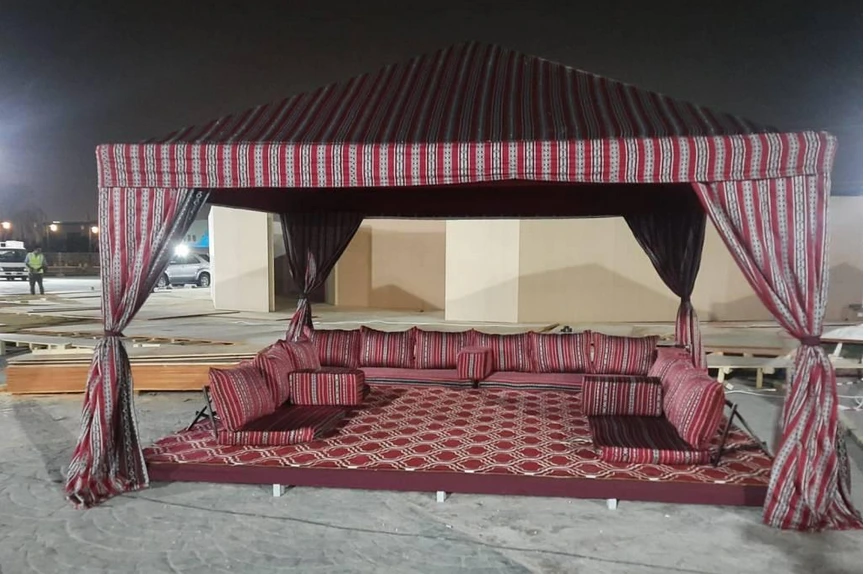
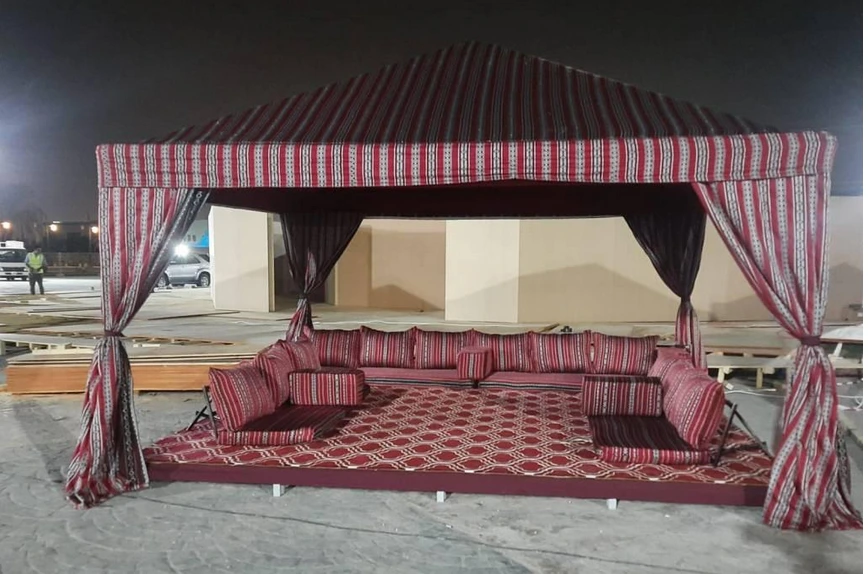
The most common "bait thabit" form in UAE domestic settings. A concrete or tiled platform is built — typically elevated 30 to 50 cm above grade — and a structural tent or fabric-covered steel frame is erected permanently on it. The tent fabric is UV-stabilised and treated for water and fire resistance. The interior is fully fitted as a permanent living space: tiled or carpeted floor, electrical installation, air conditioning, and Arabic majlis furnishing. Lifespan: 10 to 20 years with periodic fabric replacement.
Steel Frame Permanent Structure with Fabric Cladding
A more substantial fixed structure using galvanised steel or aluminium box-section framing with fabric or composite panel cladding. The structural frame is permanent; the cladding panels can be replaced or changed. This approach is standard for UAE farm houses (مزارع), rest houses, and Bedouin heritage recreation structures. The interior layout can be fully customised — multiple rooms, bathroom facilities, and kitchen area are all possible within the structural frame.
Traditional Beit Al Shaar on Permanent Foundations
A fixed implementation of the traditional Bedouin hair tent, using modern materials that replicate the traditional aesthetic while providing far greater durability. The structural poles are galvanised steel; the fabric is a woven high-density polyethylene (HDPE) or acrylic-coated polyester that mimics the texture and colour of goat-hair tent fabric. Popular for UAE heritage parks, cultural centres, and traditional-style farm houses.
Types of Mobile Houses
Portable Majlis Tent System
A complete Arabic majlis tent that can be erected and dismantled by a four-person crew in 4 to 6 hours. The frame is aluminium or galvanised steel for lightness and corrosion resistance; the fabric panels are precut and attached with click-fastener systems. The interior furnishing — seating, rugs, lighting — is all modular and designed to pack into a small number of wheeled flight cases for transport. Used by families who want a high-quality reception tent for seasonal use (October to April) that can be stored in a warehouse during the summer.
Pre-Fabricated Portable Cabin with Arabic Design
A steel-framed portable cabin manufactured to a specific Arabic reception room specification — exterior finished with traditional decorative panels (mashrabiya, archwork, or arabesque mouldings), interior fitted as a complete majlis. These units can be loaded on a flatbed truck and placed on site without a foundation (they sit on adjustable levelling pads). Popular for UAE farm properties and sites where a permanent structure would require municipality approval.
Folding/Collapsible Arabic Tent
A fully collapsible tent structure using a scissor-fold aluminium frame — similar in principle to a large pop-up gazebo but engineered to UAE residential quality standards. Erection time: 45 to 90 minutes for one or two people. Fabric panels in traditional tent colours (cream, beige, or camel) with embroidered or printed Arabic motifs. Maximum size approximately 6 x 9 m. Used for Ramadan tents, event overflow areas, and farm hospitality settings.
Key Quality Standards for UAE Fixed and Mobile Houses
- Fire resistance: All fabric and panel materials must be fire-retardant to UAE Civil Defence requirements — specifically BS 7837 or equivalent for fabrics used in enclosed spaces.
- UV stability: UAE UV exposure (UV index 10–12 in summer) degrades standard fabrics within 12 to 24 months. Quality structures use solution-dyed acrylic or UV-stabilised polyester with a minimum 5-year UV warranty.
- Wind loading: Structures must be engineered for the UAE Shamal wind season (summer north-westerly gusts to 70 km/h). Permanent structures require ground anchoring; portable structures require ballasting or staking.
- Thermal comfort: Fixed structures should include insulated fabric or panel systems. Provision for air conditioning should be included in the design from the start.
Typical Costs for Fixed and Mobile Houses in UAE
| Structure Type | Size | Indicative Cost (AED) |
|---|---|---|
| Fixed platform tent (furnished majlis) | 6 x 8 m | 35,000 – 65,000 |
| Steel frame farm house | 8 x 12 m | 55,000 – 95,000 |
| Portable majlis tent (modular) | 6 x 9 m | 18,000 – 38,000 |
| Prefab cabin (Arabic design) | 5 x 8 m | 28,000 – 55,000 |
All costs include supply and installation. Furnishing, air conditioning, electrical connection, and foundation work are additional.
Arab Muzalat: Fixed and Mobile House Solutions Across UAE
Arab Muzalat designs and builds both fixed and mobile house structures for UAE residential, agricultural, and commercial clients. From traditional beit al shaar on permanent platforms to portable majlis tent systems and prefab Arabic-design cabins, we deliver complete turnkey projects. Contact us for a free site visit and detailed quotation.