Why Arabic Tents Work for Events in the UAE
Arabic tents — خيام عربية — solve a specific event challenge in the UAE: how to host large groups outdoors in a culturally resonant, visually striking space that can be erected in days and removed just as quickly. Unlike permanent venues or hotel ballrooms, a well-fitted Arabic tent brings warmth, identity and intimacy to any gathering — from a 30-person Ramadan iftar to a 500-person wedding reception.
The UAE event calendar makes Arabic tents especially relevant: Ramadan, National Day celebrations, heritage festivals, Eid al-Fitr, Eid al-Adha, and the outdoor season from October to March all create concentrated demand for quality tented spaces with an authentic Arabic character.
Sizing Your Arabic Tent for an Event
The most common planning mistake is underestimating the space needed once tables, chairs, service corridors and a stage or buffet area are accounted for. A reliable rule: allow 1.5–2m² per seated guest for a majlis-style floor plan, or 2–3m² per guest for a table-and-chair banquet layout.
- 25–40 guests: 6×10m or 8×10m tent
- 60–100 guests: 10×15m or 12×15m tent
- 150–250 guests: 15×25m or 20×20m tent
- 300–500 guests: 20×30m or 20×40m tent, or two linked structures
Always add 15–20% to your guest count for service and circulation space. A tent that feels generously sized reads as luxurious; one that feels cramped communicates the opposite.
Arabic Tent Decoration for Events
The interior defines the guest experience more than any other element. Standard Arabic event tent decoration includes:
- Ceiling draping: White or ivory sheer fabric gathered from a central peak, often with fairy lights woven through.
- Chandeliers and Moroccan lanterns: Hung at regular intervals from the ridge pole or cross beams.
- Floor covering: Persian or kilim-patterned rugs over a hard base, or wall-to-wall carpet for formal events.
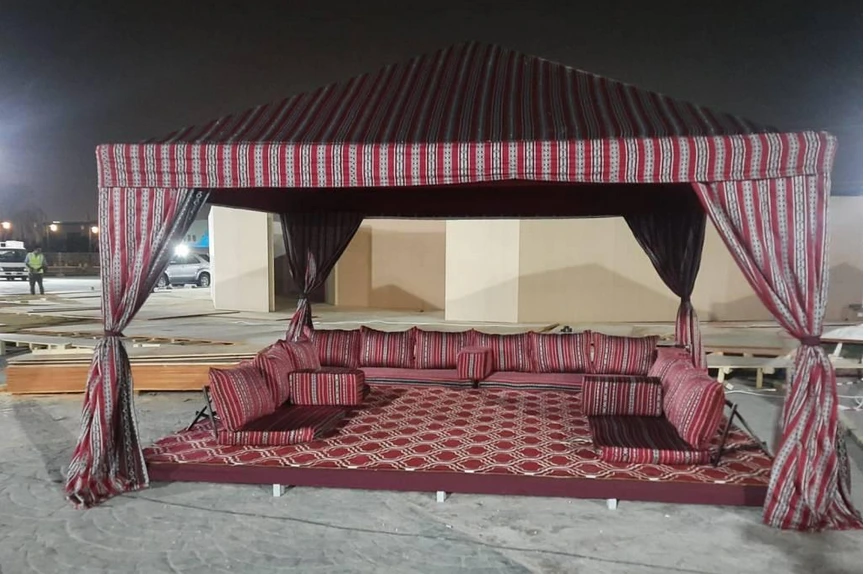
- Arabic seating sections (jalsa): Low cushion seating along the perimeter with chair-and-table banquet seating at the centre.
- Decorated entrance arch: Embroidered or woven panels at the entrance signal the arrival of a distinct, curated space.
Decoration packages are typically offered by tent suppliers as a bundled service, priced between AED 5,000 and AED 40,000 depending on the level of detail and tent size.
Planning Timeline for an Arabic Tent Event
For events with 100+ guests or those requiring municipality permits — required in Dubai and Abu Dhabi for structures above a certain footprint — lead times of 4–6 weeks are standard. For smaller private events on private land, 10–14 days is usually sufficient.
- 6 weeks before: Confirm tent size, layout, supplier and date. Apply for permits if required.
- 3–4 weeks before: Finalise decoration package, catering layout, power and lighting plan.
- 1 week before: Delivery and installation of tent structure and flooring.
- 2–3 days before: Interior decoration, lighting rig, furniture placement.
- Event day: Final styling, table settings, ambient lighting test.
Ramadan Tents: A Special Category
Ramadan is the peak season for Arabic tent installations across the UAE. Demand spikes from late February, and the most popular sizes and decoration packages are fully booked by early March. If you are planning a Ramadan tent — for a private villa, a restaurant courtyard, or a community gathering — book by January to guarantee availability and secure your preferred decoration style.
A fully equipped Ramadan Arabic tent typically includes: main structure with decorative exterior panels, interior draping and lighting, low jalsa seating, a dedicated coffee and dates station, carpet, and air-cooling connections where needed.
What is the best size for a Ramadan Arabic tent for a family villa?
For a typical family villa in Dubai or Abu Dhabi hosting 30–60 guests for iftar, a 6×10m or 8×12m Arabic tent is the most practical choice. It fits most garden or driveway spaces, requires no special permit on private land, and can be installed and removed within two days. Furnished packages for this size range from AED 8,000 to AED 22,000 for the full Ramadan month.
Do Arabic tents need a permit in the UAE?
In Dubai, temporary structures on private land under 30m² typically do not require a permit from Dubai Municipality. Larger structures, or any tent installed on public or semi-public land (hotels, malls, community areas), must be approved by the relevant authority — Dubai Civil Defence for fire safety and Dubai Municipality for the structural footprint. Your tent supplier should advise on permit requirements for your specific location and can often submit applications on your behalf.
Can Arabic tents be air-conditioned?
Yes. The most common approach is portable evaporative coolers positioned at the tent perimeter with flex ducting fed under the tent skirt. For fully enclosed tents, portable packaged AC units (5–10 tonnes depending on tent size) provide effective cooling. A full climate-control installation adds AED 2,000–AED 15,000 to the project cost depending on the cooling load required.
Renting vs Buying Arabic Tents for Events
For one-time or annual events, renting an Arabic tent almost always makes better financial and logistical sense. The rental price covers structure, setup, takedown, and storage. For organisations running more than three or four tented events per year, ownership typically recovers its cost within two to three years.
Arab Muzalat: Event Arabic Tent Specialists
Arab Muzalat has been supplying and installing Arabic tents for events across the UAE since our founding. We handle everything from permit consultation to final decoration styling. Our event packages include structure, flooring, lighting, interior decoration and post-event removal — all quoted as a single transparent price with no hidden charges.
Call +971 58 590 5666 to discuss your event requirements and get a site visit and quote within 48 hours.